

Relocation Guide · Signal Hill, Calgary SW
Moving to Signal Hill from Toronto or Vancouver: What the YouTube Tours Don’t Tell You
Honest answers to the specific questions a Toronto or Vancouver buyer asks when they’re doing serious research — including the parts that aren’t entirely in Signal Hill’s favour.
You’re in a condo in the Annex, or maybe a semi in East Van, and Calgary keeps coming up in the same conversation as ‘actually affordable’ and ‘surprisingly good quality of life.’ Signal Hill specifically looks promising — $988,411 average for a detached home, mountain views, decent schools, a real neighbourhood feel. But you’ve never lived in Calgary, you’ve never driven the commute, and you’re being asked to spend close to a million dollars on a house in a city you’ve watched on YouTube.
This guide is written for exactly that situation. Not a brochure. Not a sales pitch for Signal Hill. Just the specific questions a Toronto or Vancouver buyer asks when they’re doing serious research — answered honestly, including the parts that aren’t entirely in Signal Hill’s favour.
The Price Comparison You’ve Been Running in Your Head
Let’s do the math directly, because you’ve already been doing it imprecisely and it’s worth getting right.
Signal Hill’s 2026 detached home average is $988,411. That range runs from just under $700K to over $1.3M — so there’s real entry-level opportunity here if you’re not expecting something magazine-ready. What does $988K actually buy you? Typically: 2,000–2,600 square feet of finished living space, an attached double garage, a proper yard on a 40–50 foot lot, and a house that was built in the 1990s or early 2000s on an established street with mature trees. In many cases, you’re also getting a finished basement and a view of the Rockies that only works because of Signal Hill’s southwest elevation.
In Toronto’s North York or Etobicoke — the west-end neighbourhoods most similar in character to Signal Hill — that same $988K gets you a semi-detached or a smaller detached with a single-car garage, probably 1,400–1,800 square feet, in a neighbourhood with similar transit access but meaningfully less space per dollar. A directly comparable Signal Hill home — double garage, full basement, 2,400 square feet, established street — would list somewhere between $1.5M and $1.9M in those Toronto west-end equivalents. That gap is not small.
Vancouver math is more extreme. The Dunbar, Kerrisdale, or Marpole equivalents to Signal Hill — established single-family residential, good schools, reasonable transit, southwest quadrant of a major city — start at $2.2M and go up from there for comparable square footage. The Signal Hill value proposition isn’t just ‘cheaper Calgary’ — it’s a genuinely different housing market tier.
Land Transfer Tax: The Closing Cost Toronto Buyers Miss
$500–$900
Alberta Land Titles fee on a $988K purchase
$14,475
Ontario Provincial Land Transfer Tax on same purchase
$25K–$30K
Total closing cost advantage vs. Toronto city purchase
One more number worth knowing if you’re coming from Ontario: Alberta doesn’t charge a Land Transfer Tax. Ontario’s Land Transfer Tax on a $988K purchase would run roughly $14,475 (plus the Toronto Municipal Land Transfer Tax if you’re buying in the city, which adds another $13,725). Alberta charges only a Land Titles registration fee — typically $500–$900 on a home at this price point. That’s a closing cost difference of $25,000–$30,000 that often gets missed in relocation calculations.
Alberta’s Tax Structure and What It Actually Means for Your Income
You’ve probably seen ‘no provincial income tax in Alberta’ mentioned somewhere. It’s slightly overstated — Alberta does levy its own provincial income tax. But the rates are meaningfully lower than Ontario or BC, and at the income levels of Signal Hill buyers, the difference is real money.
Alberta’s provincial income tax rate tops out at 15% on income over $341,502. Ontario’s top provincial rate is 20.53%. BC’s is 20.5%. If your household income is in the $200K–$300K range — which reflects the Signal Hill median — you’re looking at a provincial tax difference of roughly $8,000–$15,000 per year depending on your specific income and deductions. Over five years, that’s meaningful. It doesn’t make Signal Hill cheap, but it’s a real and recurring financial advantage that gets glossed over in most relocation content.
The other Calgary-specific cost that surprises out-of-province buyers is hail insurance. Worth covering directly.
Top Provincial Income Tax Rates
Alberta 15%
Ontario 20.53%
BC 20.5%
Estimated annual difference at $200K–$300K household income: $8,000–$15,000
Hail Insurance: The Calgary-Specific Cost Nobody Warned You About
Calgary’s hail season runs roughly May through September, with the serious events concentrated in June and July. Signal Hill sits in the southwest of the city, which is in what insurers consider a higher-risk corridor for hail damage. This is not agent spin in reverse — it’s a real cost consideration, and buying without understanding it is how people end up surprised after their first June in the city.
The Standard Policy Reality
Standard home insurance in Signal Hill will cover hail damage, but premiums are higher than what Ontario or BC buyers are used to, and deductibles for hail-specific claims can be structured differently than general property damage deductibles. Some policies are now written with separate hail deductibles — sometimes 1–2% of insured value, which on a $988K home means $9,880–$19,760 out of pocket before insurance covers the roof replacement.
The Class 4 Shingles Solution
The upgrade that changes this math is Class 4 impact-resistant shingles. A roof with Class 4 shingles — the highest impact-resistance rating — qualifies for meaningful premium discounts from most major insurers, sometimes 20–30% on the hail component of your policy. If you’re buying a home with a standard asphalt roof, the cost to upgrade is real, but so is the insurance savings over time. Ask specifically about the shingle rating on any home you’re seriously considering — it’s the kind of thing a Signal Hill-experienced buyer’s agent flags automatically, but that a first-time Calgary buyer won’t know to ask.
We have a full breakdown of hail insurance costs, Class 4 shingles, and what to ask your broker on the Signal Hill Hail Insurance Guide.
The Commute Reality: CTrain, Driving, and What Tuesday Morning Actually Looks Like
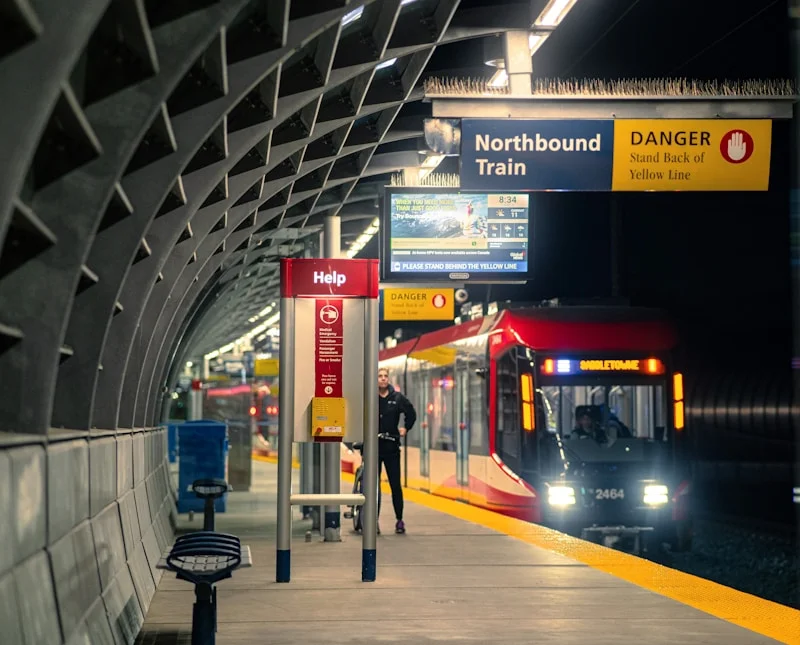
Signal Hill is about 14 kilometres southwest of downtown Calgary. The CTrain West LRT line has two stations that serve Signal Hill residents: 69th Street and Sirocco. From either station, you’re looking at roughly 20–25 minutes to the downtown core (City Hall or 8th Street stations) during off-peak travel. Peak rush hour adds maybe 5 minutes — the CTrain isn’t subject to traffic congestion the way driving is.
The honest caveat: most Signal Hill residents drive to the station rather than walk. Neither 69th Street nor Sirocco is a short walk from the main residential streets in the neighbourhood — you’re typically looking at a 10–15 minute drive to the station and then the train ride. There’s parking at both stations, but it fills up early on weekday mornings, and the LRT park-and-ride experience is not the same as stepping from your Toronto condo to the subway. If walkable transit access is a non-negotiable for your lifestyle, Signal Hill is honest about what it is: a car-optional rather than car-free neighbourhood.
Driving downtown from Signal Hill takes 20–30 minutes in normal conditions, 35–45 minutes in heavy morning traffic heading east on Glenmore Trail or north on 37th Street. The good news for anyone coming from Toronto: Calgary’s traffic, even at its worst, is a different category of problem. The bad news for anyone coming from Vancouver: the roads are very wide, the driving culture is fast, and winter adds real complexity from November through March.
Speaking of winter — southwest Calgary gets Chinooks, which means sudden warm spells mid-winter that melt the snow and briefly feel like spring. Signal Hill buyers from Toronto sometimes underestimate winter driving not because Calgary is worse than Toronto, but because the freeze-thaw cycle from Chinooks creates icy road conditions that are different from the steady cold you manage with winter tires in Ontario. Get winter tires. This is not a casual recommendation.
Schools, Registration, and What ‘Good Schools’ Actually Means Here
Signal Hill has a genuinely strong school situation, but ‘good schools’ on a real estate website means nothing without specifics. Here’s what the catchments actually look like.
Calgary Board of Education (Public)
- Battalion Park School — K–6
- Griffith Woods School — 7–9 (some catchment areas)
- Ernest Manning High School — Strong academic reputation, consistent provincial assessment results
Calgary Catholic School District
- St. Margaret School — Elementary catchment
- St. Thomas Aquinas School — Elementary catchment
- St. Mary’s High School — Catholic secondary option, southwest Calgary
Menno Simons Christian School and Rundle College are independent school options accessible to Signal Hill families — both have specific admission processes and aren’t automatic based on address, but they’re within reasonable distance for families considering independent education.
Calgary school registration opens in January or February for the following September. If you’re planning a summer move from Toronto or Vancouver, you should be thinking about school registration the winter before you arrive — not after you close on the house.
Out-of-province buyers consistently underestimate this timeline, and popular schools with limited spots fill quickly.
See the full school catchment details and what parents actually say about each school on our Signal Hill Schools & Amenities page.
Your Alberta Relocation Checklist
The administrative side of an interprovincial move is tedious and nobody covers it well. Here’s what you actually need to do when you arrive in Alberta — in rough order of priority:
Alberta Health Care (AHCIP) Registration
Apply as soon as you establish Alberta residency. There’s a three-month waiting period before AHCIP coverage kicks in, during which your Ontario or BC provincial health coverage continues. Do not let your previous province’s coverage lapse before Alberta kicks in. The application is through Alberta Health Services and requires proof of residency.
Alberta Driver’s Licence
You have 90 days from establishing Alberta residency to exchange your out-of-province licence for an Alberta one. Good-faith exchanges from Ontario and BC are generally straightforward — you keep your existing class and don’t retest. But the 90-day window is real and there are fines for missing it.
Vehicle Registration Transfer
Also 90 days. Alberta requires a vehicle inspection if the vehicle was registered in certain provinces; confirm this with an Alberta registry agent early. Registry agents in Alberta are private businesses (unlike Ontario’s ServiceOntario) — there’s one in the Signal Hill Shopping Centre area.
Real Property Report (RPR)
This is an Alberta-specific requirement that catches almost every out-of-province buyer off guard. An RPR is a legal survey document showing the property’s boundaries and improvements (house, garage, fences, decks) — required for residential closings in Alberta. Sellers typically provide it, but if it’s outdated, a new survey runs $500–$1,500. Budget for it, and ask your lawyer about the status early in the transaction.
Utility Setup
Alberta has a deregulated electricity and natural gas market, which means you choose your energy provider rather than having a default assignment. ATCO Gas handles most natural gas distribution in the southwest. Electricity retailers are multiple and vary by rate structure. This is different from Ontario and BC and confuses new arrivals — budget time to compare plans in the first month.
School Registration
If you’re moving with school-age children, contact the Calgary Board of Education or Calgary Catholic School District as soon as your address is confirmed. Don’t wait until after possession.
What Signal Hill Is and Isn’t (An Honest Assessment)
Signal Hill was built out primarily in the 1990s and early 2000s. That means the neighbourhood is established — the trees are real trees, the streets are settled, the community has an identity. It’s not a new-build suburb with construction equipment next door and a show home every third lot. That’s a genuine advantage if what you want is a finished neighbourhood.
The flip side: many Signal Hill homes are 25–30 years old. Poly-B plumbing (a flexible plastic pipe used in Calgary residential construction through much of the 1990s and now considered a liability because of its failure rate) appears in some Signal Hill homes and is worth checking for specifically during your inspection. Not every home has it, but enough do that it’s a standard item on a good Calgary home inspection checklist. Your inspector should flag it; if they don’t ask, you ask them.
The neighbourhood skews toward established families and empty nesters — it’s not a young professional scene and it doesn’t have the density or the café culture of inner-city Calgary communities. What it has is space, quiet, decent transit access, and a shopping node at Westhills and Signal Hill Shopping Centre that covers most practical needs without a long drive. Sunterra Market is there for grocery, and Bro’Kin Yolk has earned a real following for weekend brunch.
If you’re coming from a walkable inner-city Toronto neighbourhood and expecting that character to transfer, Signal Hill will feel like a suburb — because it is one. If you’re coming from Scarborough, Mississauga, or the suburbs of North Vancouver and you want space, established character, and a real house rather than a condo or a semi, Signal Hill is genuinely hard to beat at this price point in Calgary.
For a side-by-side look at how Signal Hill compares to Springbank Hill, Aspen Woods, and West Springs on the specific factors that matter for relocating buyers, the Neighbourhood Comparison page breaks it down with data rather than opinions.
Want the numbers first?
The Signal Hill Market Stats page has the current price data, inventory levels, and days-on-market trend — no PDF required, no 12-page CREB report to comb through. Just Signal Hill, updated monthly.
2026 Signal Hill at a Glance
$988,411 — Detached avg.
$427,460 — Condo/townhome avg.
111 detached sales
121 condo/townhome sales
Source: CREB 2026
Get Your Relocation Questions Answered
The questions that don’t fit a guide — ‘Is this specific street okay?’, ‘How do I know if I’m overpaying in this market?’, ‘Is now actually a good time to buy here?’ — those are worth a real conversation.
Our Signal Hill neighbourhood expert partner has worked this specific community long enough to give you straight answers, not sales answers. They’re not going to tell you Signal Hill is perfect for every buyer, because it isn’t. But if it’s right for your situation, they’ll tell you why and show you what’s actually available.
[adinserter block=”1″]
Also see: Signal Hill Market Stats · Neighbourhood Comparison · Schools & Amenities · Hail Insurance Guide
Have Questions About Signal Hill?
Drop us your details and we'll connect you with our Signal Hill specialist.
Thanks!
We'll be in touch within one business day.